
When couples first get engaged, wedding planning usually begins with excitement.
You imagine the venue, the outfits, the music, the people you love gathered together. Everything feels magical — until one question quietly appears:
“How much is this actually going to cost?”
That’s the moment when planning a budget for a wedding becomes one of the most important steps in the entire journey.
Not because weddings should feel restricted by money — but because clarity brings peace. A thoughtful budget allows you to enjoy planning instead of constantly worrying about expenses.
The truth is simple: a good wedding budget doesn’t limit your celebration.
It helps you build a wedding that feels meaningful, realistic, and stress-free.
This guide will walk you through budgeting in a way that feels human, manageable, and genuinely helpful.
Why Planning a Budget for a Wedding Matters So Much
Many couples avoid budgeting at the beginning because it feels uncomfortable.
But without a clear plan, small decisions slowly add up — and stress appears later.
A well-planned budget helps you:
- Make confident decisions
- Avoid unexpected costs
- Reduce financial arguments
- Prioritize what truly matters
- Enjoy the engagement period peacefully
Budgeting is not about cutting joy.
It’s about protecting it.
Step 1: Start With an Honest Conversation
Before opening spreadsheets or researching prices, sit down together and talk openly.
Discuss:
- Total amount you feel comfortable spending
- Contributions from family (if any)
- Savings vs monthly payments
- Financial priorities after marriage
There’s no “correct” wedding budget — only what feels right for your life.
When planning a budget for a wedding, emotional comfort matters just as much as numbers.
Step 2: Decide Your Top Priorities
Every couple values different parts of a wedding.
Ask yourselves:
- Do we care most about photography?
- Is food the biggest experience for guests?
- Is the venue our main focus?
- Do we want an intimate or large celebration?
Choose three top priorities.
Spend more there — and simplify elsewhere.
This single step prevents overspending more than anything else.
Step 3: Understand Where Wedding Money Usually Goes
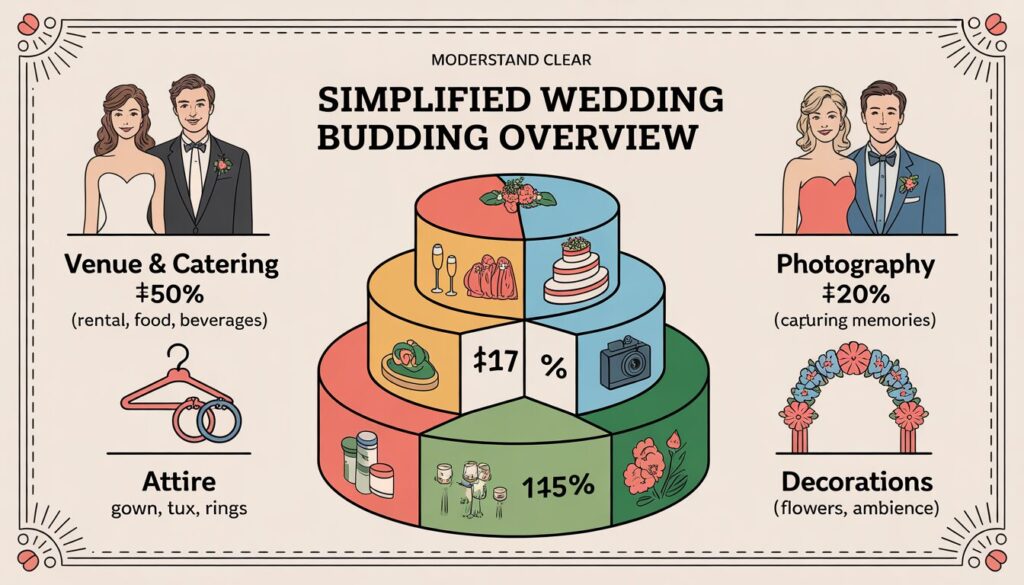
A realistic wedding budget often looks like this:
CategoryApproximate AllocationVenue & Catering40–50%Photography & Video10–15%Attire5–10%Décor & Flowers8–12%Entertainment8–10%Stationery2–3%Miscellaneous5–10%
These percentages are flexible, but they help when planning a budget for a wedding for the first time.
Step 4: Always Plan for Hidden Costs
One of the biggest surprises couples face is unexpected expenses.
Common hidden costs include:
- Taxes and service charges
- Vendor travel fees
- Alterations
- Tips and gratuities
- Shipping costs
- Extra rental hours
Add a 10–15% buffer fund to your budget.
Think of it as stress insurance.
Step 5: Create a Simple Tracking System
You don’t need complicated financial software.
A simple system works best:
✔ Spreadsheet
✔ Notebook
✔ Budget planning template
Track three columns:
- Estimated cost
- Actual cost
- Paid amount
Seeing numbers clearly reduces anxiety instantly.
👉 Many couples find it easier to stay organized using a structured wedding budget planner. You can explore a simple planning template here →
Step 6: Guest Count Directly Affects Budget
Here’s a truth many couples learn late:
Every additional guest increases multiple costs.
More guests mean:
- More meals
- Larger venue space
- More rentals
- More invitations
- Bigger décor setup
If budgeting feels tight, adjusting guest count often helps more than cutting meaningful experiences.
Step 7: Separate “Must-Haves” From “Nice-to-Haves”
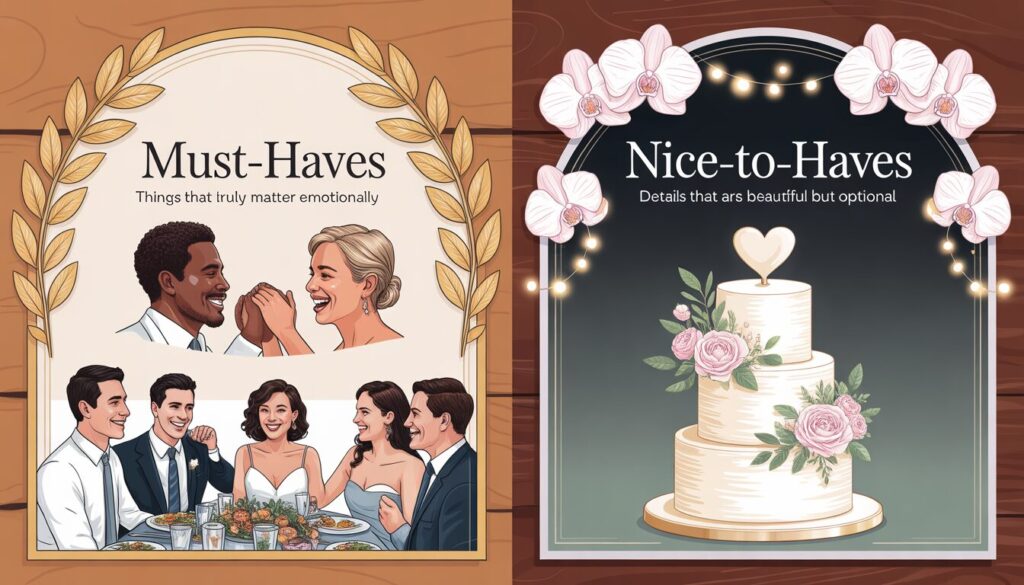
When planning a wedding, inspiration online can make everything feel necessary.
Instead, divide ideas into:
Must-Haves
Things that truly matter emotionally.
Nice-to-Haves
Details that are beautiful but optional.
This keeps planning a budget for a wedding grounded in intention rather than comparison.
Step 8: Book Smart, Not Fast
Early decisions save money — but rushed decisions can waste it.
Before booking vendors:
- Read reviews carefully
- Understand packages fully
- Ask about overtime fees
- Confirm what’s included
The cheapest option isn’t always the best value. Reliability matters more than price alone.
Step 9: Save Without Sacrificing Experience
Smart budgeting doesn’t mean removing beauty.
Simple ways couples save:
- Choosing off-season dates
- Friday or Sunday weddings
- Digital invitations
- Minimal but intentional décor
- Multi-purpose ceremony and reception space
Guests remember atmosphere and emotion — not price tags.
Step 10: Talk About Money Without Stress
Budget discussions can feel emotional.
Helpful mindset shift:
You’re not negotiating against each other.
You’re planning together for your future.
Check in regularly:
- Are we still comfortable?
- Are we overspending anywhere?
- Do we need adjustments?
Open communication keeps planning peaceful.
Common Budgeting Mistakes Couples Make
Trying to Copy Other Weddings
Every financial situation is different.
Ignoring Small Expenses
Small costs accumulate quickly.
Spending Equally on Everything
Priorities create satisfaction.
Forgetting Post-Wedding Costs
Honeymoon or future plans matter too.
Learning from these helps make planning a budget for a wedding smoother and more realistic.
👉 Want to organize weddings like a pro? Read > How to Plan a Wedding as a Wedding Planner.
The Emotional Side of Wedding Budgeting

Money conversations aren’t only financial — they reflect values.
You learn:
- How you make decisions together
- How you compromise
- What experiences matter most
In many ways, budgeting becomes one of the first teamwork experiences of marriage.
And that’s meaningful.
Signs Your Wedding Budget Is Working
You’ll notice:
- Fewer financial worries
- Clear decision-making
- Less comparison with others
- More excitement about the day
Planning begins to feel calm instead of overwhelming.
Final Thoughts: A Budget That Supports Joy
At its heart, planning a budget for a wedding is not about limiting celebration.
It’s about creating freedom.
Freedom to enjoy your engagement.
Freedom to make confident choices.
Freedom to begin marriage without financial stress.
Years from now, guests won’t remember how much was spent.
They’ll remember laughter, connection, and the feeling of being part of something meaningful.
And when your wedding reflects your priorities — not pressure — it becomes exactly what it should be:
A celebration that feels honest, joyful, and completely yours.
Some links in this guide are affiliate links. If you choose to purchase, we may earn a small commission—at no extra cost to you. We only recommend what we truly believe in.