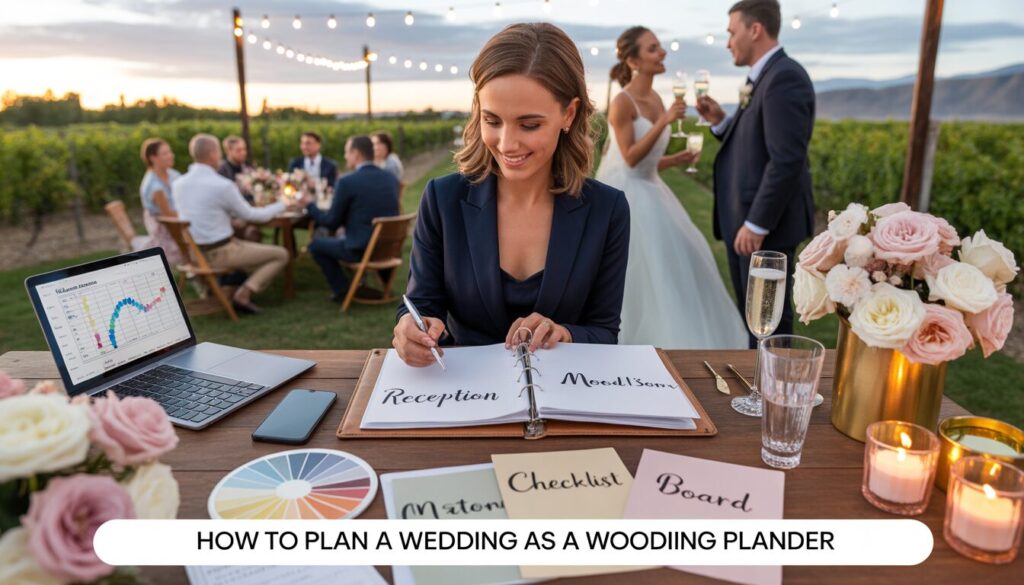
Planning a wedding looks beautiful from the outside.
Elegant venues. Perfect timelines. Happy couples. Everything flowing effortlessly.
But every wedding planner knows the truth behind those moments — a successful wedding isn’t created by luck or creativity alone. It’s built through preparation, organization, and thoughtful decision-making long before the wedding day arrives.
Understanding how to plan a wedding as a wedding planner means learning to balance logistics with emotions. You’re not only organizing an event; you’re guiding people through one of the most meaningful experiences of their lives.
Whether you’re an aspiring planner, helping a friend, or simply want to plan like a professional, this guide walks you through the real process step by step.
The Mindset Shift: Thinking Like a Wedding Planner
Before timelines or checklists, professional planning begins with perspective.
Couples often plan based on inspiration.
Wedding planners plan based on structure first, creativity second.
A planner asks:
- What decisions must happen first?
- What risks could appear later?
- How will the day flow for guests?
- What reduces stress for the couple?
Learning how to plan a wedding as a wedding planner starts by focusing on experience, not just aesthetics.
Step 1: Understand the Couple’s Vision Clearly

A wedding planner never begins with vendors or décor.
They begin with conversation.
Ask questions like:
- What feeling do you want guests to experience?
- What matters most — intimacy, celebration, elegance, or fun?
- What parts of weddings do you love or dislike?
- What are your non-negotiables?
Your job is to translate emotions into logistics.
When vision is clear, decisions become easier.
Step 2: Build a Realistic Budget Framework
Professional planners always connect ideas to financial reality early.
Instead of asking, “What do you want?” ask:
“How do we make your priorities work within your budget?”
Create categories such as:
- Venue & catering
- Photography
- Attire
- Décor & florals
- Entertainment
- Planning & coordination
- Contingency fund
A planner protects the couple from overspending while still achieving their vision.
Step 3: Create the Master Wedding Timeline
One of the most important skills in how to plan a wedding as a wedding planner is timeline creation.
A planner builds planning phases:
Phase 1 — Foundation (12–10 months)
- Budget confirmation
- Guest estimate
- Venue booking
- Key vendor selection
Phase 2 — Design & Experience (9–6 months)
- Theme development
- Attire selection
- Guest logistics
- Décor direction
Phase 3 — Coordination (5–2 months)
- Invitations
- Vendor confirmations
- Ceremony planning
Phase 4 — Execution (Final month)
- Final timeline
- Vendor communication
- Rehearsal planning
The timeline prevents overwhelm and keeps momentum steady.
Step 4: Vendor Selection Like a Professional
Wedding planners don’t just hire vendors — they build teams.
When choosing vendors, consider:
- Reliability over popularity
- Communication style
- Flexibility under pressure
- Clear contracts
A great vendor team reduces problems before they happen.
Professional planners also maintain backup options — something couples often forget.
Step 5: Design With Purpose, Not Trends
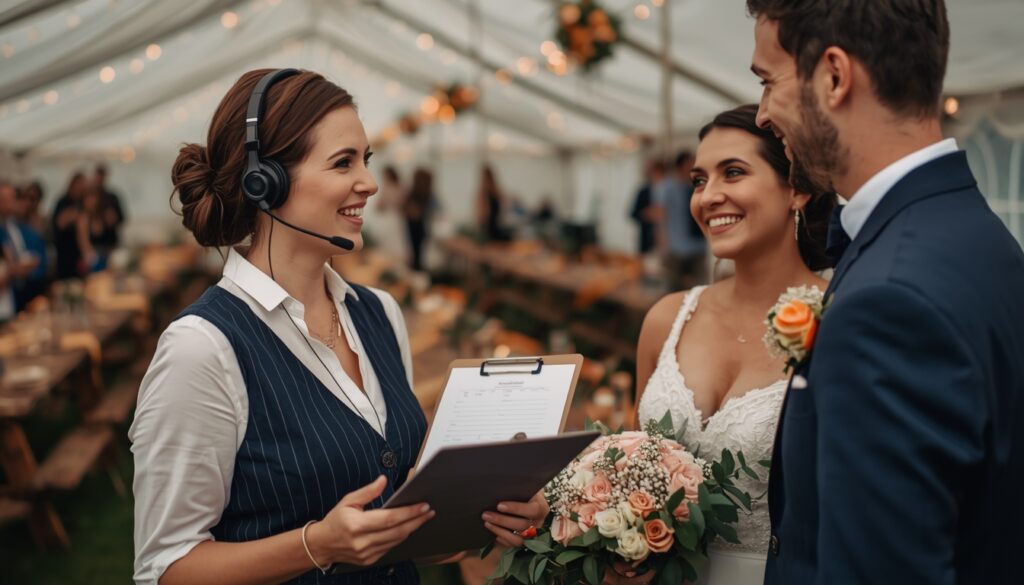
Many beginners believe planners focus mainly on décor.
In reality, planners design around flow and guest comfort.
Ask:
- Will guests move easily between spaces?
- Is lighting suitable for evening transitions?
- Does décor support the venue instead of overpowering it?
Understanding how to plan a wedding as a wedding planner means creating harmony, not excess.
Step 6: Build a Detailed Wedding Day Timeline
The wedding day timeline is the planner’s most powerful tool.
Example structure:
Morning
- Hair & makeup
- Photographer arrival
- Detail shots
Pre-Ceremony
- Getting ready moments
- First look (optional)
Ceremony
- Guest seating
- Processional
- Ceremony duration
Reception
- Cocktail hour
- Grand entrance
- Dinner service
- Speeches
- Dancing
Always include buffer time — professionals plan for delays.
Step 7: Communication Is the Planner’s Superpower
Most wedding stress comes from miscommunication.
A planner ensures:
- Vendors know arrival times
- Couples understand expectations
- Families feel informed
- Guests receive clear guidance
Clear communication creates calm environments.
👉 Wedding planning planner to stay organized → (Check Here)
Step 8: Prepare for Problems Before They Exist
Professional planners expect challenges.
Possible issues include:
- Weather changes
- Vendor delays
- Timeline shifts
- Wardrobe emergencies
Preparation includes:
- Emergency kit
- Backup schedules
- Indoor alternatives
- Extra coordination time
Good planning makes problems invisible to guests.
Step 9: Manage Emotions, Not Just Logistics
Weddings are emotional events.
Couples may feel overwhelmed. Families may have opinions. Small issues can feel big under pressure.
A wedding planner’s role includes:
- Reassurance
- Conflict calming
- Decision guidance
- Protecting the couple’s peace
Knowing how to plan a wedding as a wedding planner means supporting people, not just plans.
Step 10: Execute Quietly on the Wedding Day
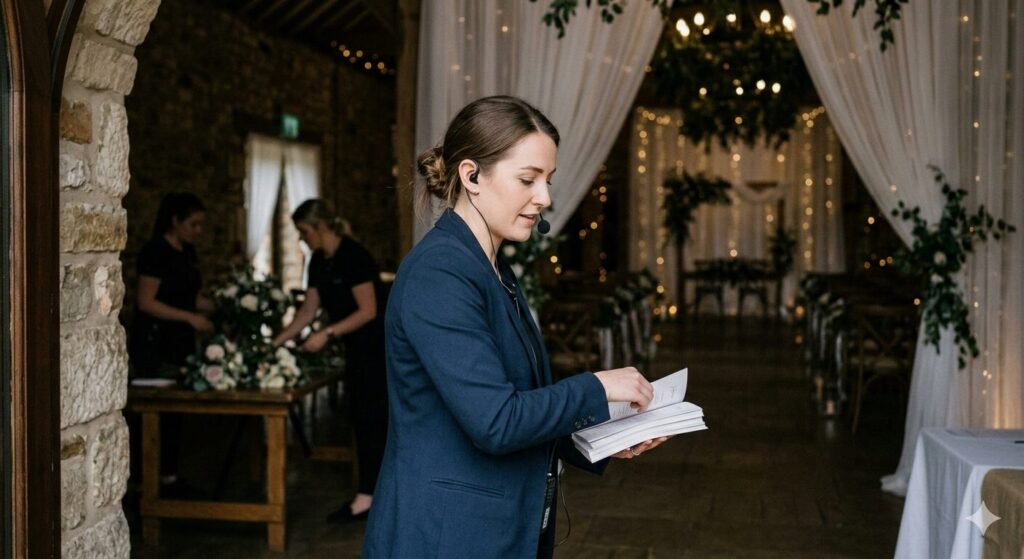
The best planners are often unnoticed.
They:
- Coordinate vendor arrivals
- Monitor timeline flow
- Solve problems privately
- Keep the couple relaxed
If guests believe everything happened effortlessly, the planner succeeded.
Common Mistakes New Planners Make
Overloading the Schedule
Less rushing creates better experiences.
Ignoring Setup Logistics
Transitions matter as much as décor.
Skipping Buffer Time
Delays are normal — plan for them.
Trying to Control Everything Alone
Teamwork improves outcomes.
👉 Read > Start your wedding journey with Planning a Budget for a Wedding to avoid unnecessary stress later.
The Real Reward of Wedding Planning
After months of coordination, the most meaningful moment isn’t the décor reveal or perfect photos.
It’s watching a couple relax, laugh, and fully enjoy their day — knowing your preparation made that possible.
That’s why learning how to plan a wedding as a wedding planner is so rewarding.
You don’t just organize events.
You create environments where memories happen naturally.
Final Thoughts: Planning With Professional Confidence
Planning a wedding like a professional isn’t about perfection.
It’s about preparation, empathy, and structure.
Start with vision.
Build strong timelines.
Communicate clearly.
Plan for the unexpected.
Focus on experience over appearance.
When these elements work together, weddings feel effortless — even though careful planning made every moment possible.
And that’s the true art of wedding planning:
Creating a day so smooth and joyful that no one sees the work behind it — only the celebration in front of them.
Some links in this guide are affiliate links. If you choose to purchase, we may earn a small commission—at no extra cost to you. We only recommend what we truly believe in.