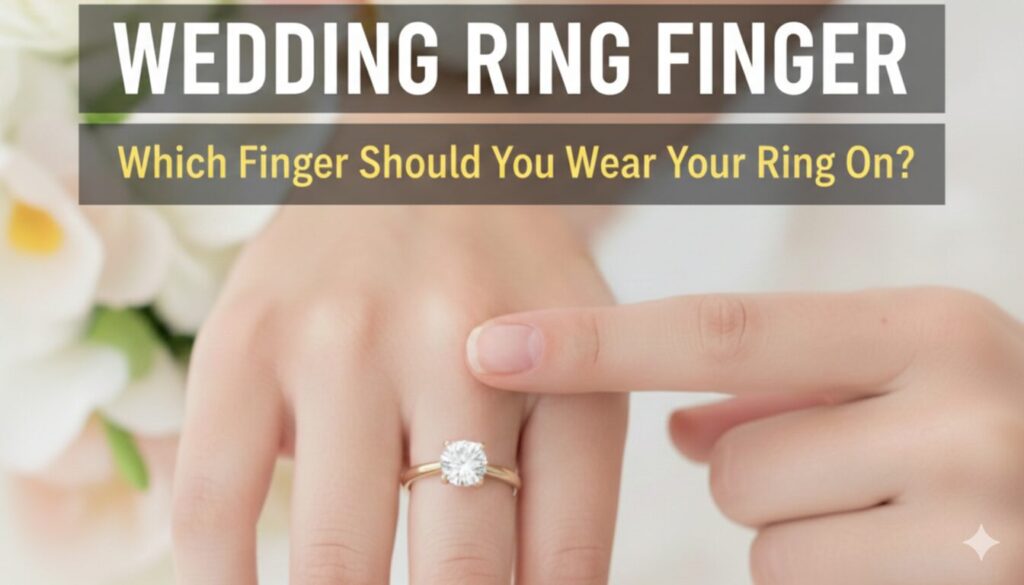
Before the vows are spoken, before the photos are taken, before the celebration begins—there’s a quiet moment when a ring is placed on a finger.
That moment may seem small, but it carries centuries of tradition, emotion, and promise. The wedding ring finger is more than just a place to wear jewelry. It’s a symbol of connection, commitment, and a shared future.
If you’ve ever wondered why the wedding ring goes on a specific finger—or what it truly represents—this guide is for you.
The Wedding Ring Finger: More Than a Tradition
The wedding ring finger is traditionally the fourth finger of the left hand. For generations, this finger has been chosen to hold one of life’s most meaningful symbols.
But the reason isn’t only tradition. It’s emotional.
Long ago, people believed this finger contained a special vein—often called the vein of love—that led directly to the heart. While science later proved otherwise, the meaning stayed. And in many ways, it still feels true.
Placing a ring on this finger became a quiet way of saying:
My heart is connected to yours.
Why the Left Hand?
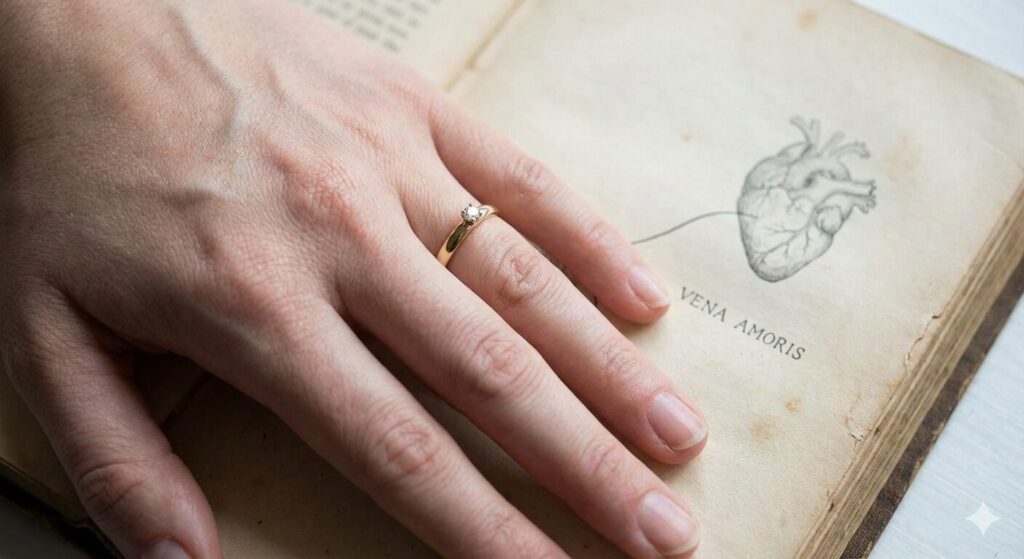
The left hand has long been associated with closeness to the heart. Across many cultures, it symbolized emotional connection, trust, and intimacy.
Wearing a wedding ring on the left hand feels natural to many people because:
- It’s closer to the heart
- It’s less dominant for most, making it comfortable for daily wear
- It holds strong historical and emotional symbolism
Even today, slipping a ring onto the left hand wedding ring finger feels instinctively meaningful.
Does the Wedding Ring Finger Change by Culture?
Yes—and this is where the story becomes even more beautiful.
While many people wear their wedding ring on the left hand, some cultures choose the right hand instead. And neither is wrong.
In different parts of the world:
- Some wear the ring on the right hand as a symbol of strength and honor
- Others switch hands after the wedding ceremony
- Some move the ring based on tradition, religion, or personal meaning
What matters most isn’t which hand you choose—it’s the intention behind it.
The wedding ring finger is ultimately the one that feels right to you.
Engagement Ring vs Wedding Ring Finger
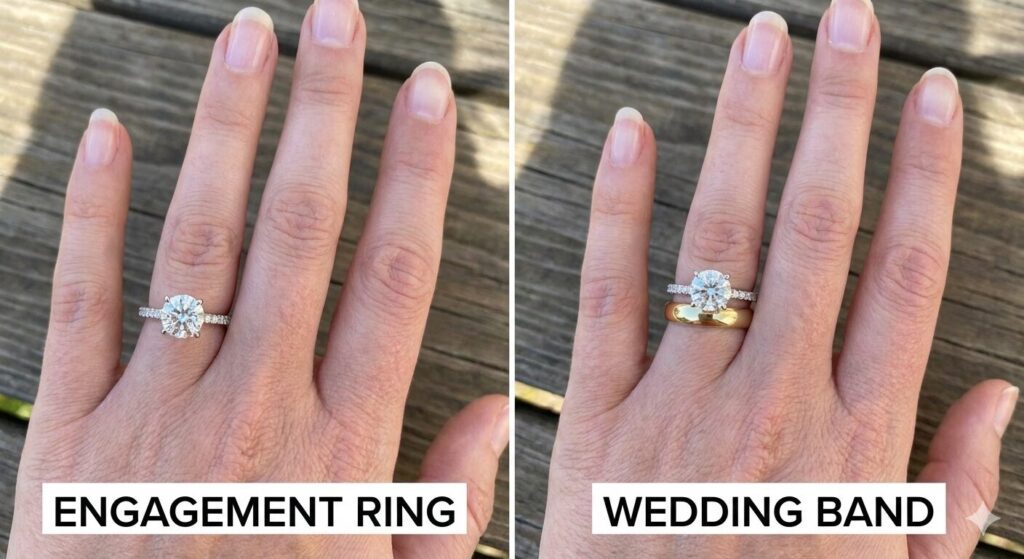
A common question many couples ask is whether engagement rings and wedding rings go on the same finger.
Traditionally:
- The engagement ring is worn on the wedding ring finger
- During the ceremony, it’s briefly moved
- The wedding ring is placed first, closest to the heart
- The engagement ring is placed back on top
Symbolically, this represents the wedding ring holding the strongest place—nearest to the heart.
But again, tradition is a guide, not a rule. Many people adjust this in a way that feels more comfortable or practical.
The Emotional Meaning of Wearing a Ring Every Day
The wedding ring finger becomes part of your daily life. You see it while driving, working, holding hands, or reaching for a cup of coffee.
Over time, the ring stops feeling like jewelry and starts feeling like belonging.
It represents:
- Stability during uncertain times
- Love during ordinary days
- A reminder that you’re not walking alone
That’s why choosing a comfortable fit and a meaningful design matters just as much as tradition.
Choosing the Right Fit for the Wedding Ring Finger
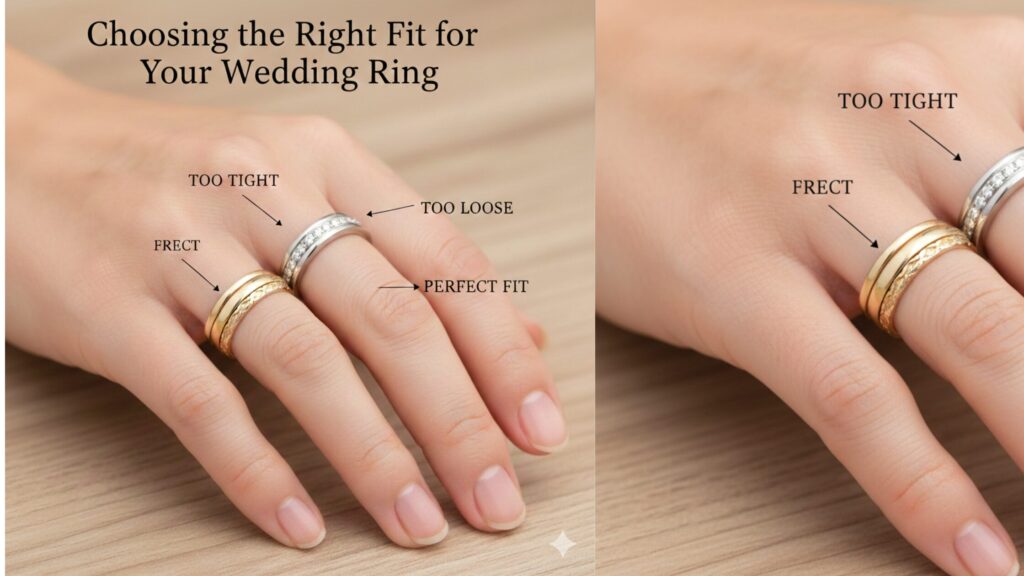
Because this ring is worn every day, comfort is essential.
A few gentle tips:
- Your finger size can change slightly with temperature
- Comfort-fit bands feel smoother for long wear
- Rings should slide on easily but not feel loose
A wedding ring should feel natural—almost like it belongs there.
When a ring fits well, you stop noticing it. And that’s often when it feels most meaningful.
What If You Don’t Want to Follow Tradition?
That’s completely okay.
Some people choose:
- A different finger
- A different hand
- A necklace instead of a ring
Modern relationships are personal, and so are the symbols that represent them.
The wedding ring finger doesn’t define your commitment—your intention does.
What matters is choosing something that reflects your relationship, not someone else’s expectations.
When the Wedding Ring Finger Becomes a Story
Years from now, the wedding ring finger will hold more than a ring. It will hold memories.
It will remind you of:
- The day you said yes
- The hands you held through change
- The quiet support during hard moments
- The joy in ordinary days
Scratches may appear. The shine may soften. But the meaning only deepens.
Common Questions About the Wedding Ring Finger
Can I wear my wedding ring on my right hand?
Yes. Many cultures and individuals do. Meaning matters more than placement.
Do both partners have to wear rings on the same finger?
No. Each person can choose what feels comfortable and meaningful.
Should the wedding ring finger feel tight or loose?
It should feel secure but comfortable—never painful or restrictive.
👉 Read > Gold Wedding Rings: How to Choose a Ring That Feels Like Forever
Final Thoughts: The Wedding Ring Finger Is a Promise, Not a Rule
The wedding ring finger isn’t just about tradition—it’s about intention.
Whether you choose the left hand, the right hand, or something entirely your own, the ring represents love, commitment, and the decision to walk through life together.
And every time you glance at that finger, it should remind you not of rules—but of a promise you chose willingly and joyfully.
Some links in this guide are affiliate links. If you choose to purchase, we may earn a small commission—at no extra cost to you. We only recommend what we truly believe in.